

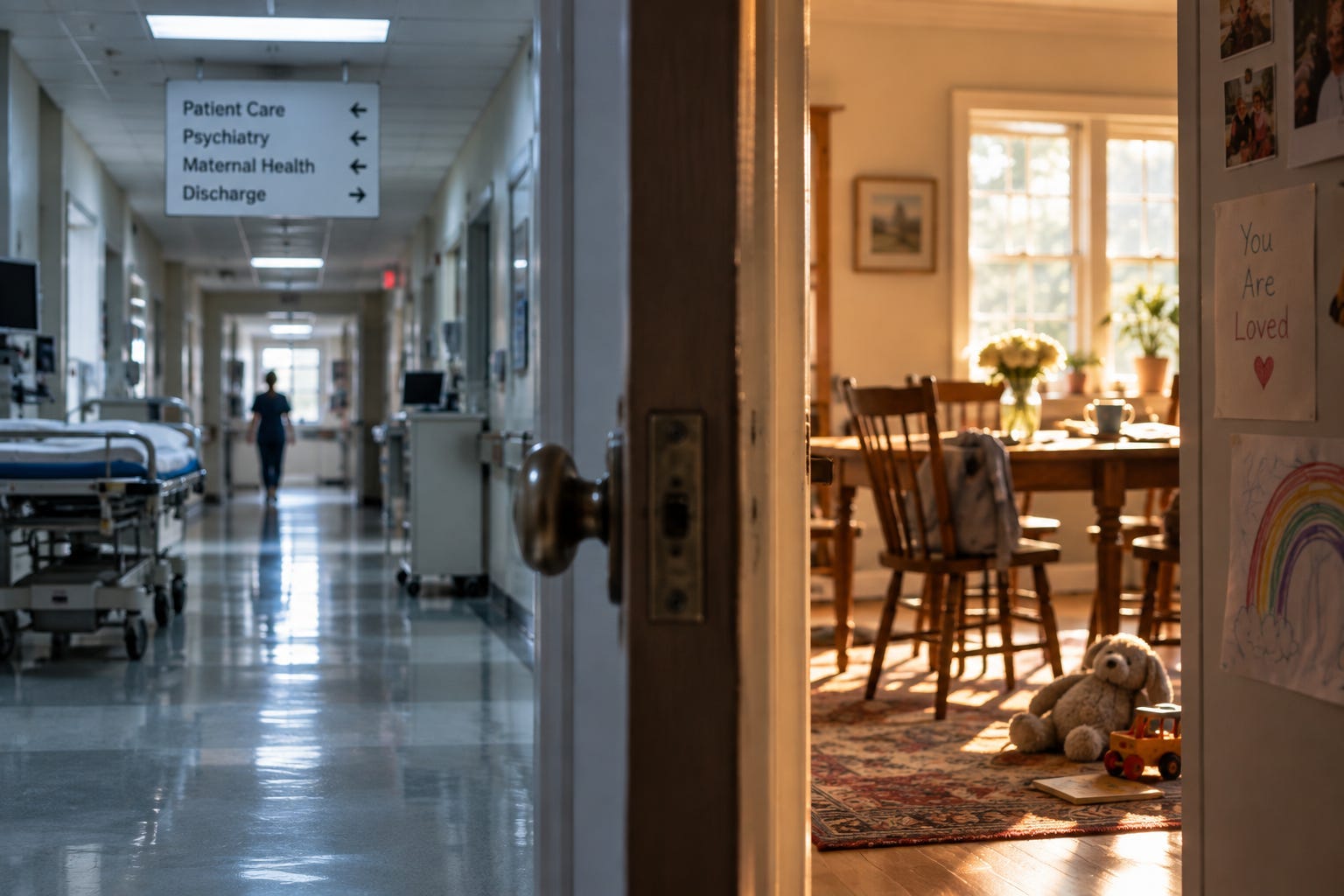
The Lindsay Clancy case is unbearably difficult to look at, perhaps even more so in the rear view mirror. I’m not going to offer an opinion about the case or its outcome. I never interviewed Ms. Clancy and I don’t have access to all of the materials related to the case. I likely followed along more than most but less than many.
These kinds of cases are noisy, on “both sides,†as someone once said. Folks with big and often undeserved platforms exploit the horror, feeding the fetish with culture wars. They do knee-jerk condemnation. The biggest and loudest arrogantly know what really happened and why, with zero hesitation, throwing red meat at their massive and siloed audiences. Our smartphones, laptops, social media, and big screen TVs are saturated with metastasizing and sensationalized toxicity while corporate vultures hover for documentary and movie rights. There was a Lindsay Clancy Special the very night the mistrial was declared! Now the husband and his new wife are appearing on 60 Minutes. The ratings deliver — every single time.
These cases also capture the public’s imagination because they are at once vaguely familiar and totally foreign. We want to know just enough so we think we know where to plant our fortress walls to keep us safe. There is often an immediate phobic instinct for disgust and distancing. Or, at the other extreme, overidentification and almost glorification yield a different kind of dismissal, turning the cataclysmic events into a political rallying cry with a Lindsay Clancy as cause celeb. Both extremes are ensnared in the exact same logic of denial —“Nothing like that could ever happen to me or someone dear to me.†Until, of course, it does.
Someone or something must be blamed, and sued, right? That helps us distance and resist the pain and confusion if we actually try to truly understand. Our appetite to simplify leads us to targets that will satiate cleanly and efficiently. When high profile psychiatric tragedies occur, hindsight may distort what happened in real time over the weeks or months before the tragedy. After the event, the before period now screams at us in 4K bolded clarity, but the before when the before was actually transpiring may have looked quite blurry, or even volleying between clear and blurry within a single week or day. Over several decades as a forensic psychologist I’ve seen the dynamics of the prologue to these unimaginable tragedies too many times.
Here is the cold, unsatisfying truth. For a clinician and patient, the threshold for various interventions can be a moving target. It’s dynamic. Involuntary commitment to a hospital is viewed by patients, clinicians…and lawyers, as a monumental, life-altering step, especially when there is no history of serious overt harm against others or self. The threshold is extraordinarily high. The before and after of a tragedy will reflect very different sets of facts. Afterwards the difficulty to commit drops dramatically and may be as much defensive as clinical.
Hundreds of patients are evaluated every day in emergency rooms across the country, and a large percentage are not considered “to meet criteria†for admission. This daily activity happens out of the public consciousness and without fanfare. Those admitted may sign a three-day notice and be out within a couple of days. Petitioning to keep them longer prior to a then unknown and unpredicted devastating event, again, involves an extremely high threshold. A clinician may vigorously encourage continued care but be unable to mandate it. A patient does not have to be asymptomatic, or even improved, to be discharged, and they often are not.
In many castastrophic cases, the patient had been hospitalized quite recently, perhaps several times. No one wants to hear about base rates in the horrific aftermath of children losing their lives, but the percentage of women suffering from PPD or PPD with psychosis who engage in the unthinkable is exceedingly low. We can debate to what degree standard of care criteria built around concepts like “evidenced-based,†“maximum benefit,†“least restrictive,†and “utilization review†reflect economic and legal considerations more than medical ones, but they do reflect the current standard of care. Clinicians are trained and conditioned to follow that standard. That is not to say clinicians never make mistakes, or shouldn’t learn more about particular syndromes, but still, what may appear negligent after the fact may not have been so in vivo.